Susan Hefuna
Activate YouTube content
Please note:
With activating cookies, they are stored on your device and a connection to the USA is established. The USA is not a safe third country within the meaning of EU data protection law. With your consent, you also consent to the processing of your data in the USA. Further information can be found in our privacy policy.
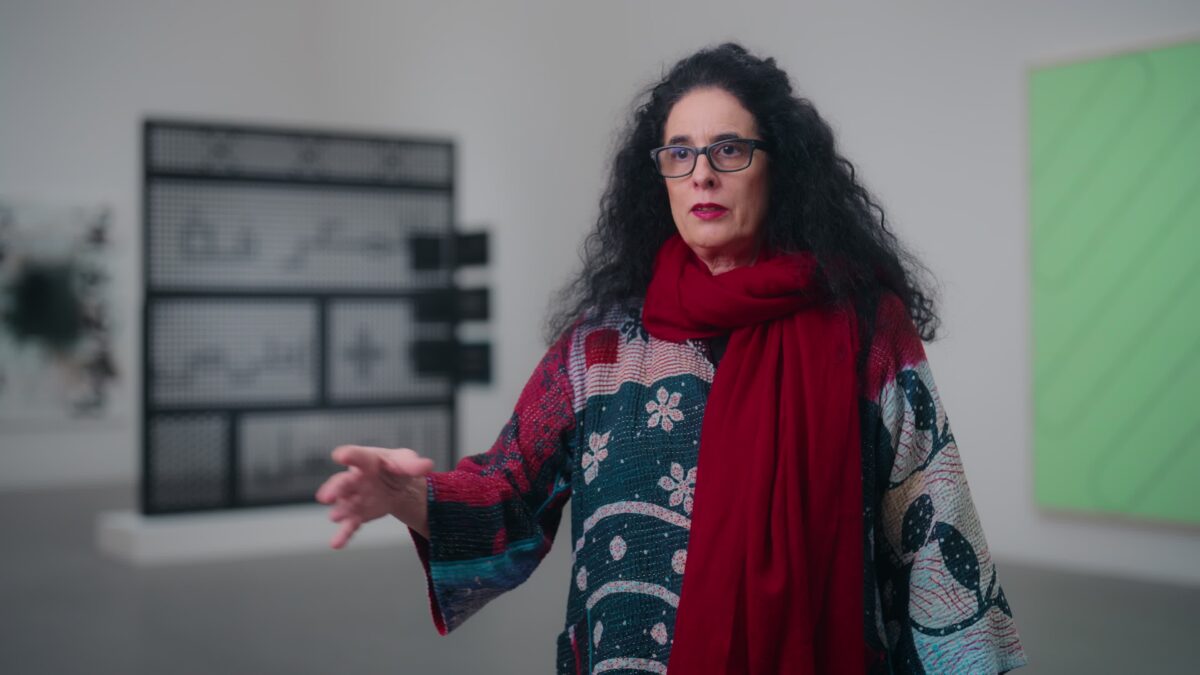
ONE ON ONE with Susan Hefuna
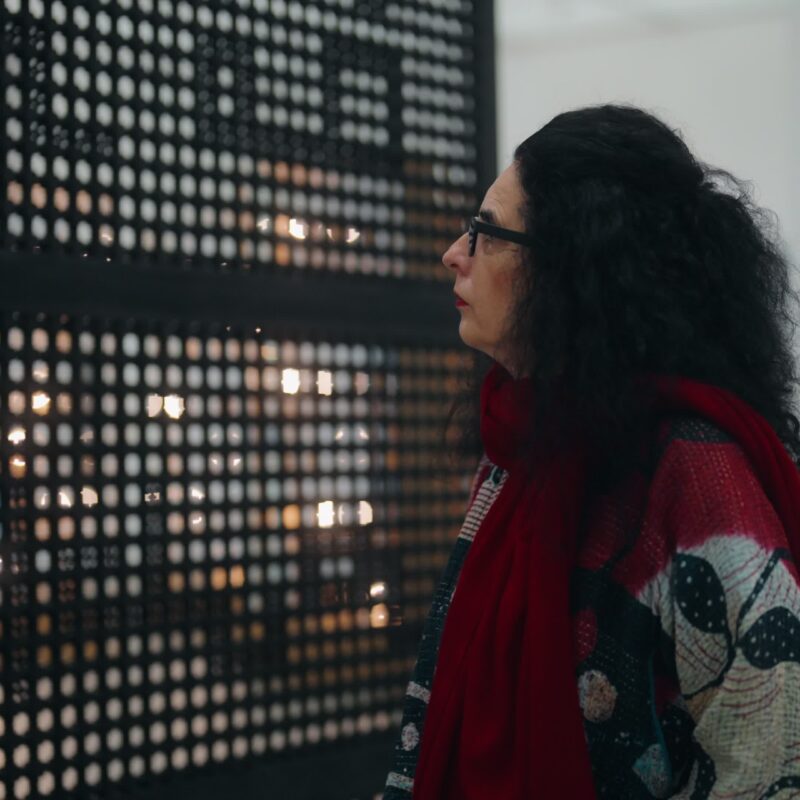
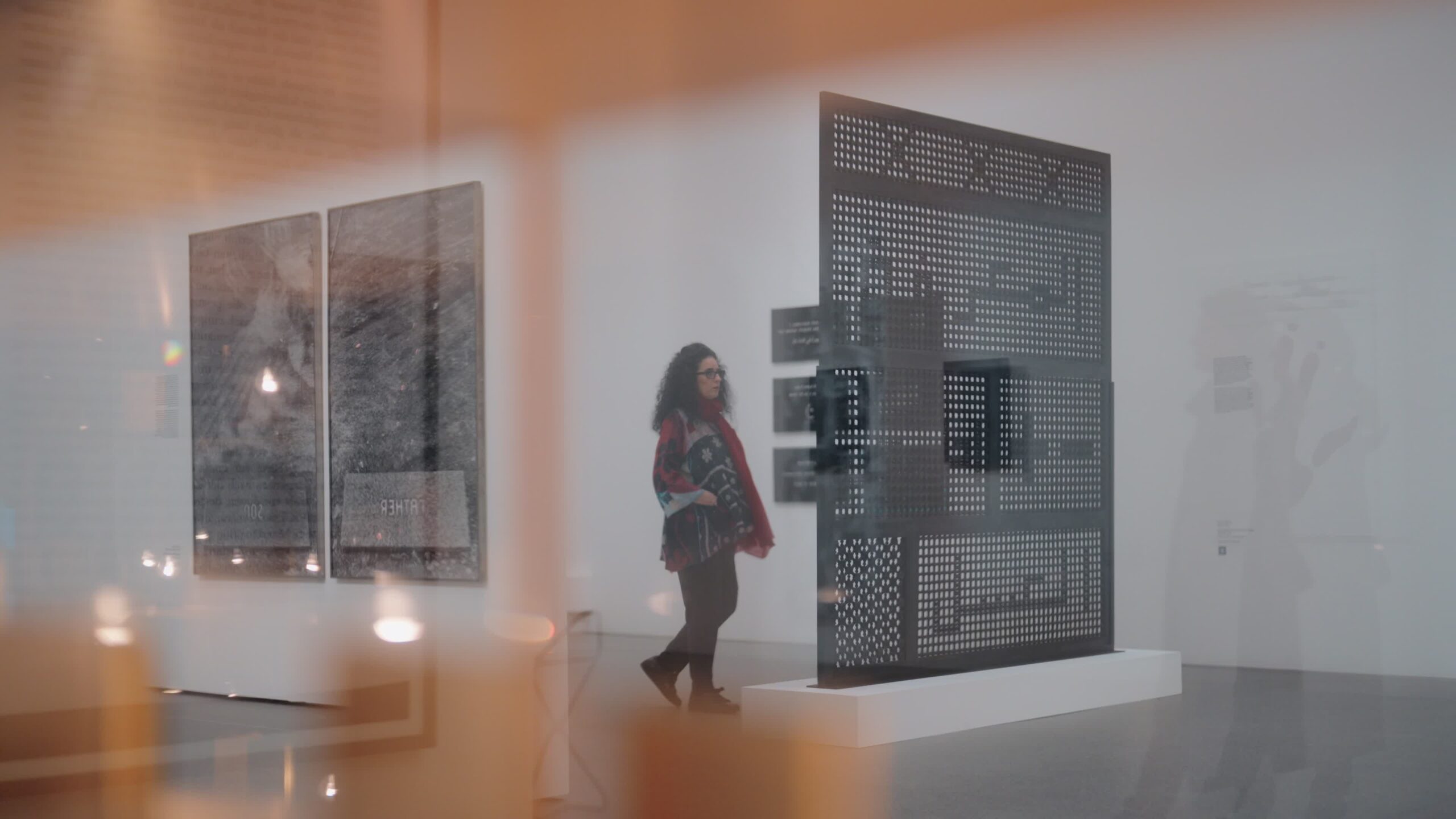
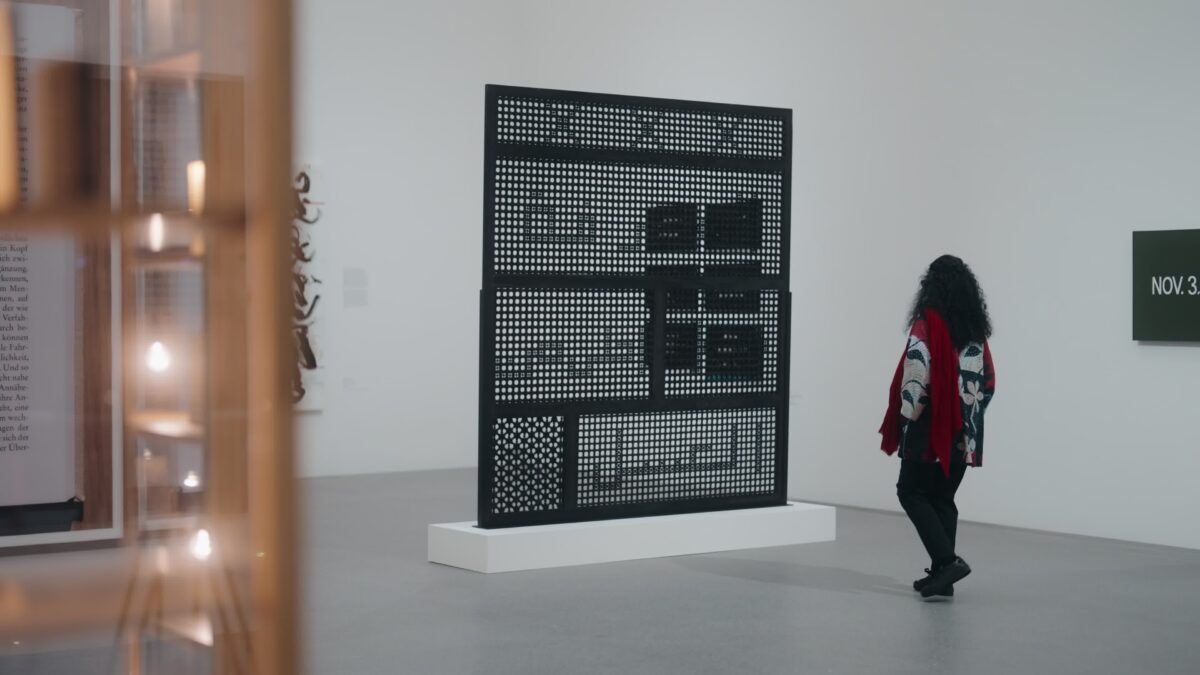
In this episode of our ONE ON ONE series, artist Susan Hefuna discusses her work "Knowledge Is Sweeter Than Honey (Arabic)" (2012)—a key piece in her Mashrabiya series and the inspiration for the title of the exhibition SWEETER THAN HONEY. A PANORAMA OF WRITTEN ART, which is on view at the Pinakothek der Moderne from December 11, 2025, to April 12, 2026.
Video: Katalog Film
Works: Susan Hefuna, Mashrabiya - Knowledge Is Sweeter Than Honey (Arabic), 2012
Courtesy Written Art Collection © Susan Hefuna
Susan Hefuna 4 women 4 views, 2001
Courtesy the artist © Susan Hefuna
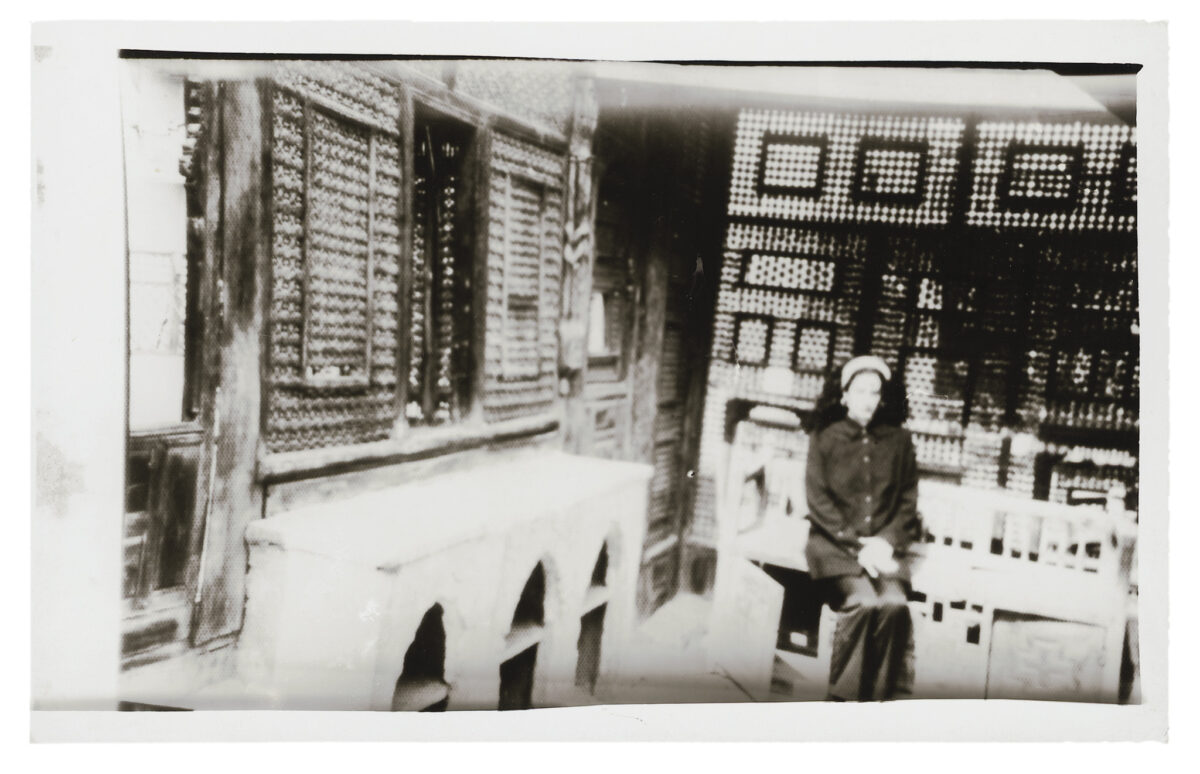
Susan Hefuna, Mashrabiya Architektur in Old Cairo, 2007
Courtesy the artist © Susan Hefuna
Between ornament and writing: Susan Hefuna's Mashrabiya series
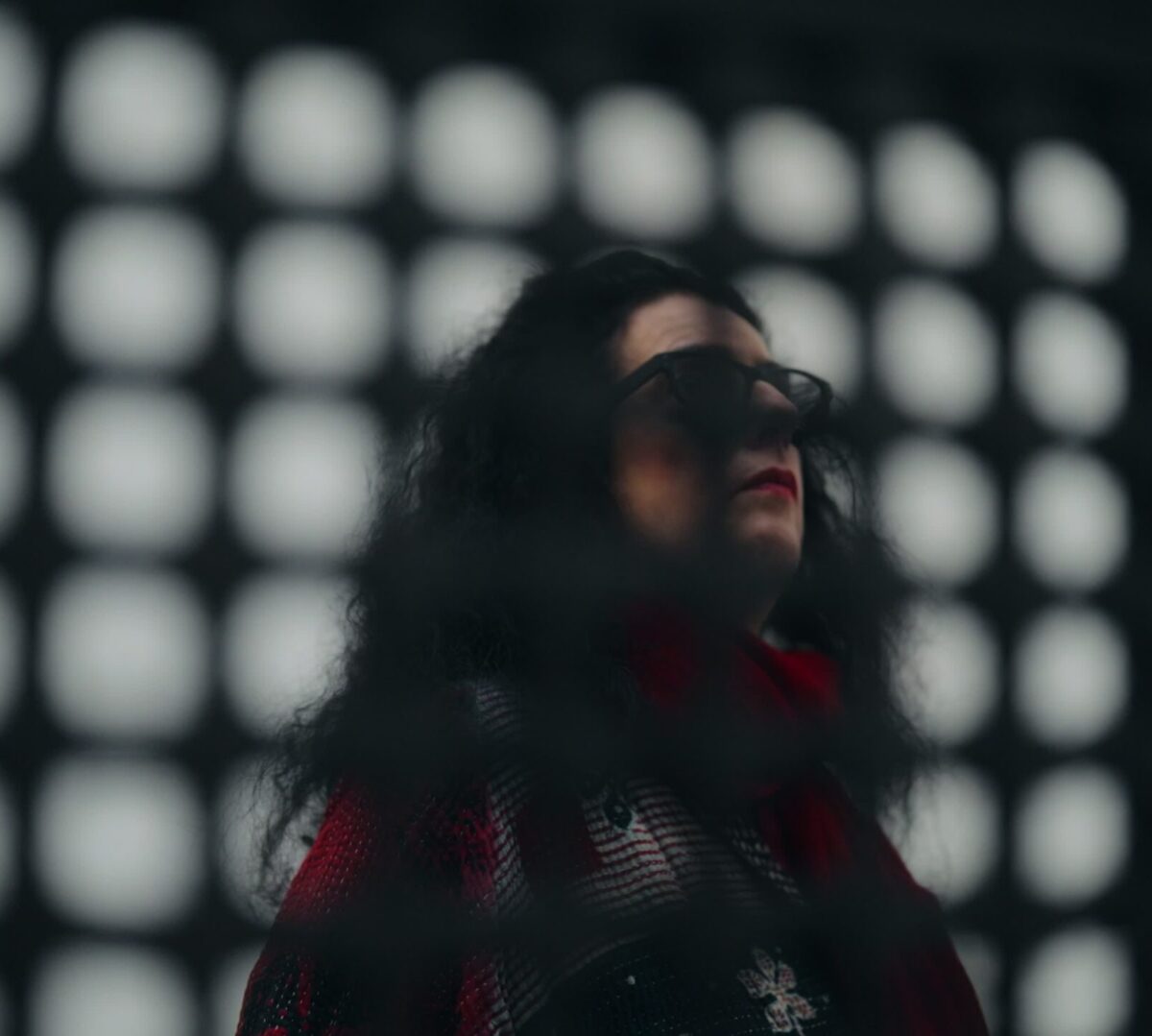
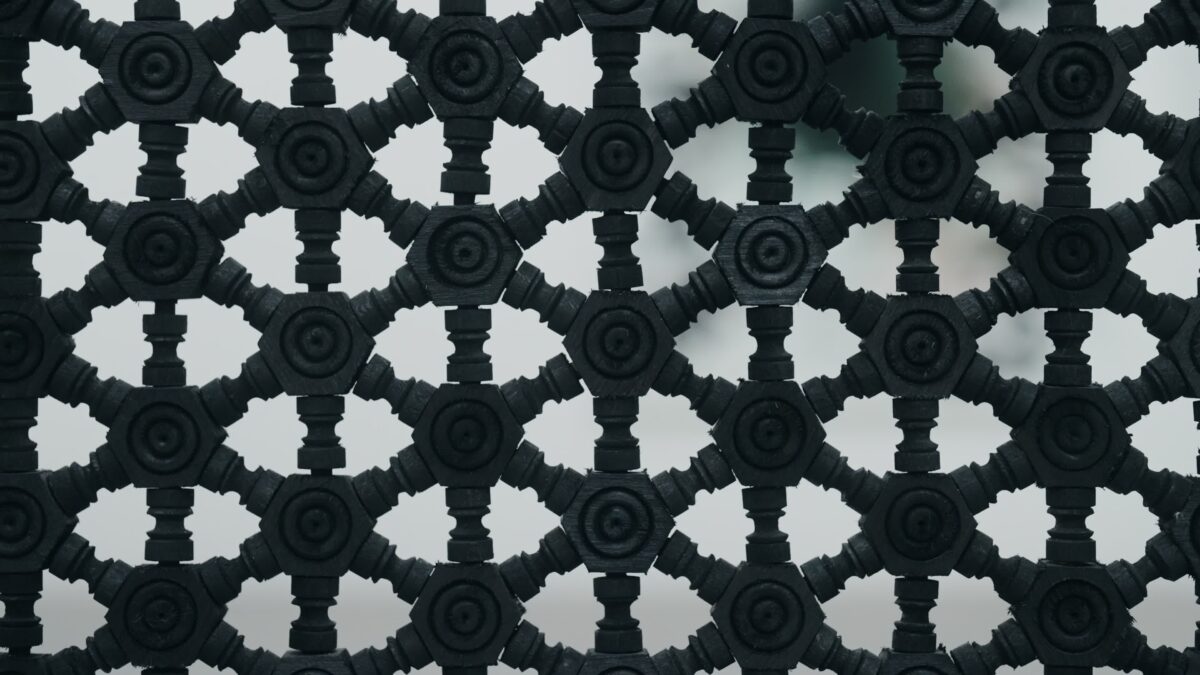
Susan Hefuna’s "Knowledge Is Sweeter Than Honey (Arabic)" belongs to her Mashrabiya series. The filigree, ornamental wooden window grilles are a defining feature of traditional Islamic architecture. They shield interiors from the sun, allow air to circulate, and create a delicate play of light and shadow. At the same time, they mark a boundary – between interior and exterior, privacy and public life, visibility and concealment – reflecting, too, the traditionally gender-segregated spheres of Islamic society.
For Hefuna, the daughter of an Egyptian father and a German mother, mashrabiyas lie at the heart of her artistic practice: they symbolise her position between cultures. Into the wooden grids she integrates Arabic or English words, phrases, numbers and symbols that can be read and understood differently depending on cultural context. For those unfamiliar with the language, they appear purely ornamental; further meanings unfold only once the words can be read. In this way, language becomes an essential element of Hefuna’s art.
Knowledge is Sweeter than Honey
It is true that we tend to see what we know and what we are familiar with.
From a feminist perspective, the title suggests that knowledge can serve as a potent instrument of equitable, intercultural communication. Hefuna’s process of producing the mashrabiyas is likewise shaped by both cultures: she undertakes preparatory studies in various locations before working in Cairo with craftspeople who hand-carve the mashrabiyas to her specifications. The grid structure of the wooden lattice also alludes, in metaphorical terms, to social and linguistic frameworks that shape patterns of thought and behaviour.
About the artist
Susan Hefuna was born in 1962 in Berlin, Germany. She lives and works in Düsseldorf, Cairo and New York. The daughter of an Egyptian father and a German mother, she grew up immersed in two cultures, two languages and two writing systems. She graduated from the Städelschule Academy of Fine Arts in Frankfurt am Main in 1992.
Hefuna works across installation, drawing, textile, sculpture, video and performance. She often references architectural and urban structures – for example, public sites such as crossroads or the mashrabiya, the ornamental latticework found in the windows of historic Islamic architecture. In her art, the mashrabiya becomes a metaphor for social structures, for the thresholds between interior and exterior, privacy and public life, visibility and concealment. Her works combine modular grids, graphic networks and delicate volumes of shadow. They include statements and single words in Arabic, English and German, and sometimes lines from songs by the Egyptian singer Umm Kulthum. In her hands, script functions not only as communication but also as sign and symbol – crosses, arrows, plus and minus signs – rhythmically embedded within the grids: sometimes legible, sometimes purely ornamental.
Hefuna’s works have been shown at the Serpentine Gallery, London (2008); in the 53rd Venice Biennale (2009); at the Museum of Modern Art, New York (2010); the Sharjah Art Foundation (2014); and the British Museum, London (2023).